05.3 §1A New Colour Emulsion, and What That Actually Means
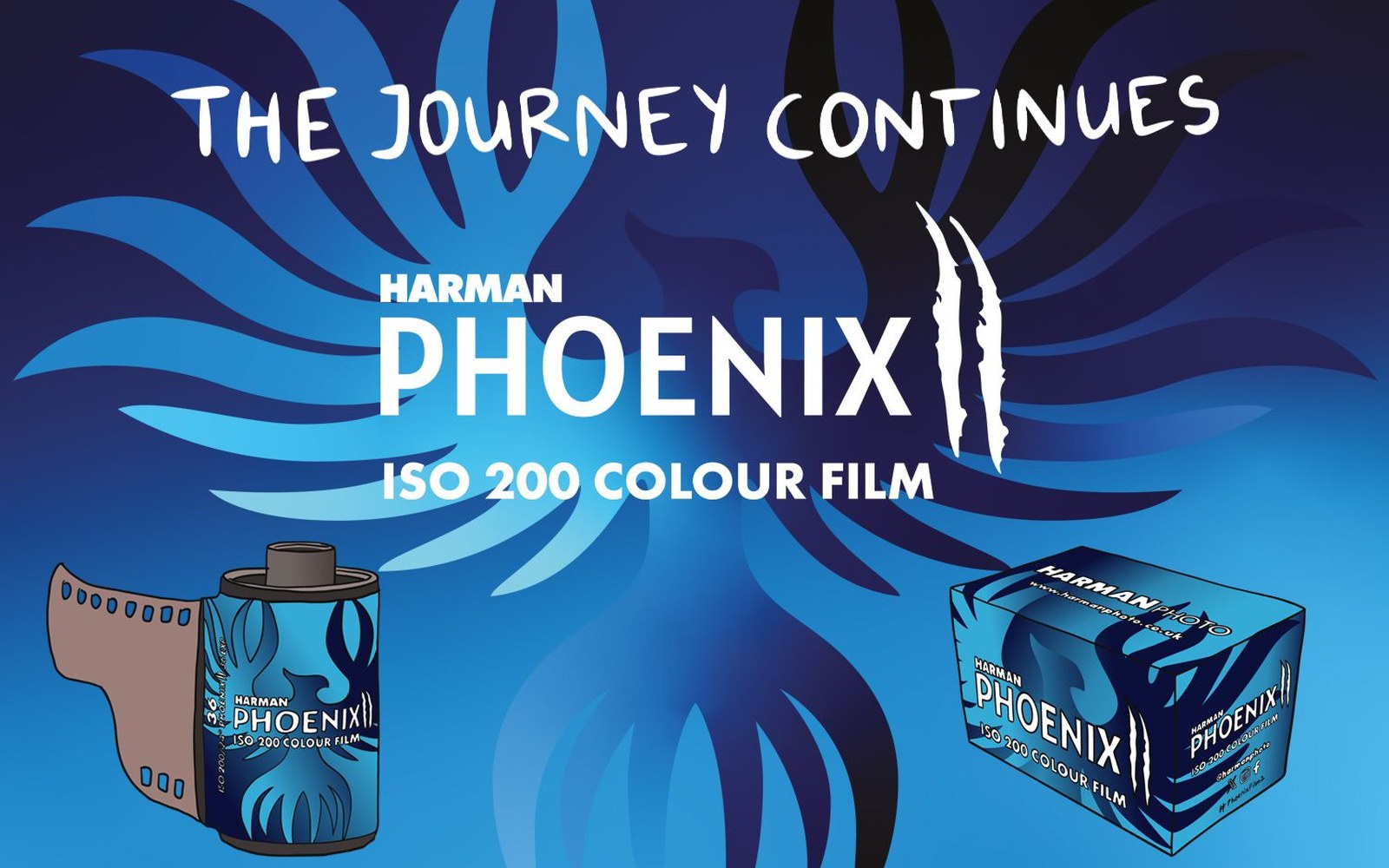
Harman Technology, the Mobberley-based manufacturer that operates under the Ilford Photo brand for black-and-white film, announced Phoenix 200 in 2023 — an ISO 200 colour negative film and the first colour emulsion manufactured in the United Kingdom in a very long time. The company is better known for HP5 Plus, Delta 3200 and the rest of its monochrome range, which share a coating line and chemistry infrastructure built around silver-halide processes that Harman has refined over decades. Colour is a different problem entirely.
A colour negative film requires not one emulsion layer but at least three: cyan, magenta and yellow dye-coupler layers that must be coated in sequence at precise thicknesses, then overcoated with UV absorbers and anti-halation backing. Each layer interacts chemically with the others during exposure and C-41 development. The tolerance stack — thickness variation multiplied across three or more layers — is tight enough that a coating run producing acceptable film is not a given on the first attempt, or the tenth. Harman has described Phoenix as the result of years of internal development, though the company has not published a precise timeline or capital figure for the project.


That reticence is itself informative. Film coating equipment is largely bespoke, maintained rather than replaced, and the institutional knowledge required to operate it does not transfer quickly. Eastman Kodak's Rochester operation and Fujifilm's Japanese coating lines represent decades of accumulated process knowledge. Starting a colour coating programme outside that lineage means rebuilding the knowledge base from chemistry up, which is the actual cost — more human capital and elapsed time than raw materials or machinery.
Phoenix 200 ships in 35 mm format and carries the characteristic colour signature of a film tuned for available light rather than daylight accuracy — warm highlights, compressed shadows — a deliberate aesthetic positioning that distinguishes it from Kodak Gold or Fujicolor 200. The C-41 compatibility means it processes in any standard minilab or home kit without modification.
Whether Harman can sustain and extend the Phoenix line depends on factors no announcement addresses: coating yield, batch consistency across seasons, and whether a market that has already absorbed Cinestill, LomoChrome and several boutique rebrands will generate the volume to justify the investment. The engineering answer to "what does a new colour emulsion cost to launch" is: more than most companies have tried to find out.