05.5 §1What the supply chain says
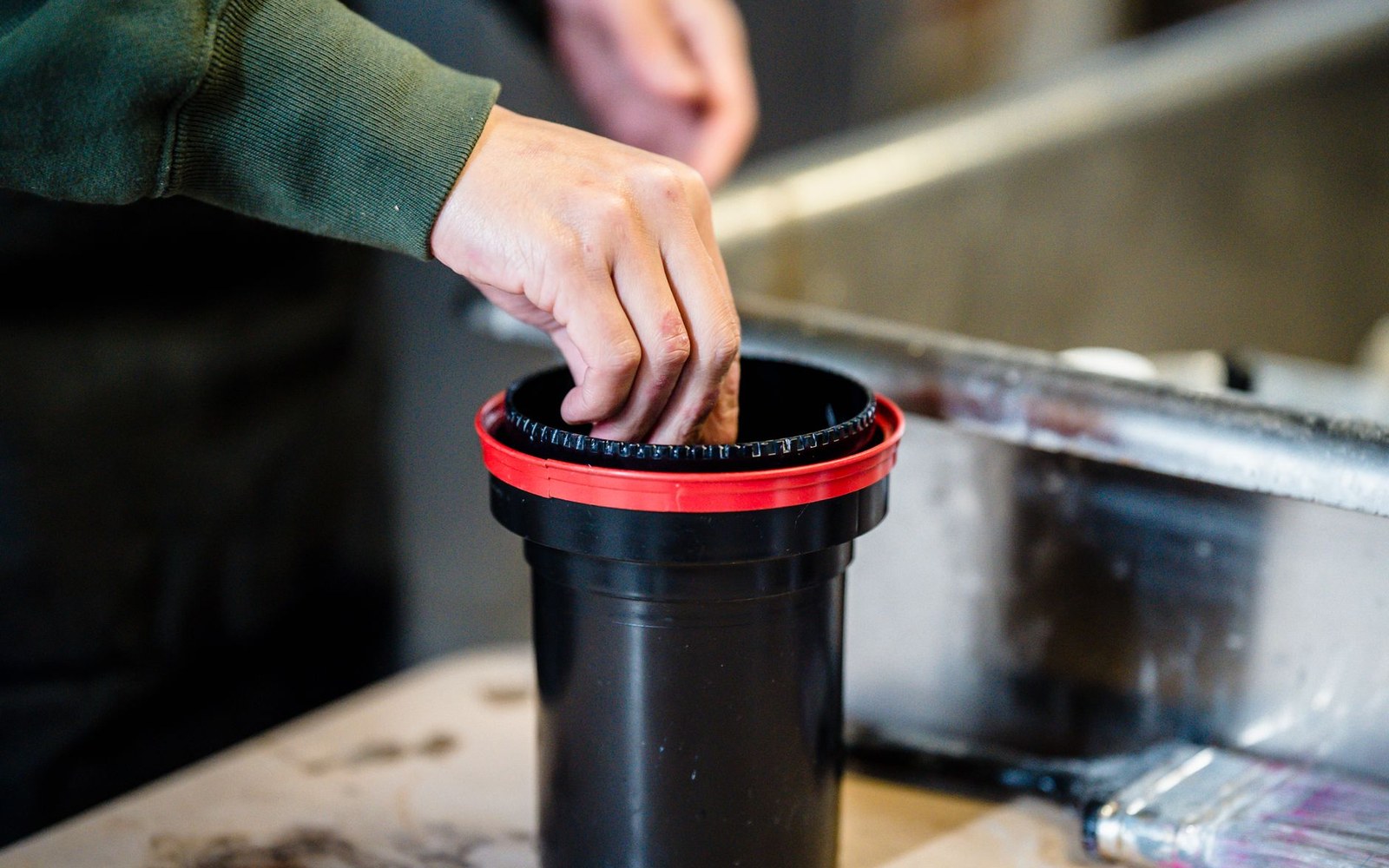
Paterson tanks, Jobo reels, Cinestill's chemistry kits, Kodak's HC-110 — none of these are new products. What is new is who is buying them. Distributors serving the UK and European amateur market, including Firstcall Photographic, have reported sustained growth in starter-kit sales since roughly 2020, a pattern that aligns with the broader film camera resurgence that Kodak Alaris and Ilford's parent company Harman Technology have each acknowledged in public statements without publishing granular figures.
The mechanism is simple. A roll of 35 mm film developed commercially costs between £8 and £15 in the UK at the time of writing; the same roll developed at home costs a fraction of that once a one-time investment in a daylight-loading tank and a set of reels is made. Kodak's HC-110 liquid concentrate, Ilford's ID-11, and Cinestill's Df96 monobath each offer different trade-offs between shelf life, grain character and process simplicity, but all are available through postal order. The barrier to entry is lower than at any point since the mass-market darkroom era.
Paterson Products, the Glasgow-based manufacturer, remains the dominant producer of the plastic daylight tanks that have defined home developing since the 1960s. Ilford Photo's published guidance on home processing — updated in recent years to acknowledge the re-entry market — recommends the Paterson system as a starting point, a de facto endorsement from the largest monochrome film manufacturer still operating at scale.
05.5 §2Colour changes the equation
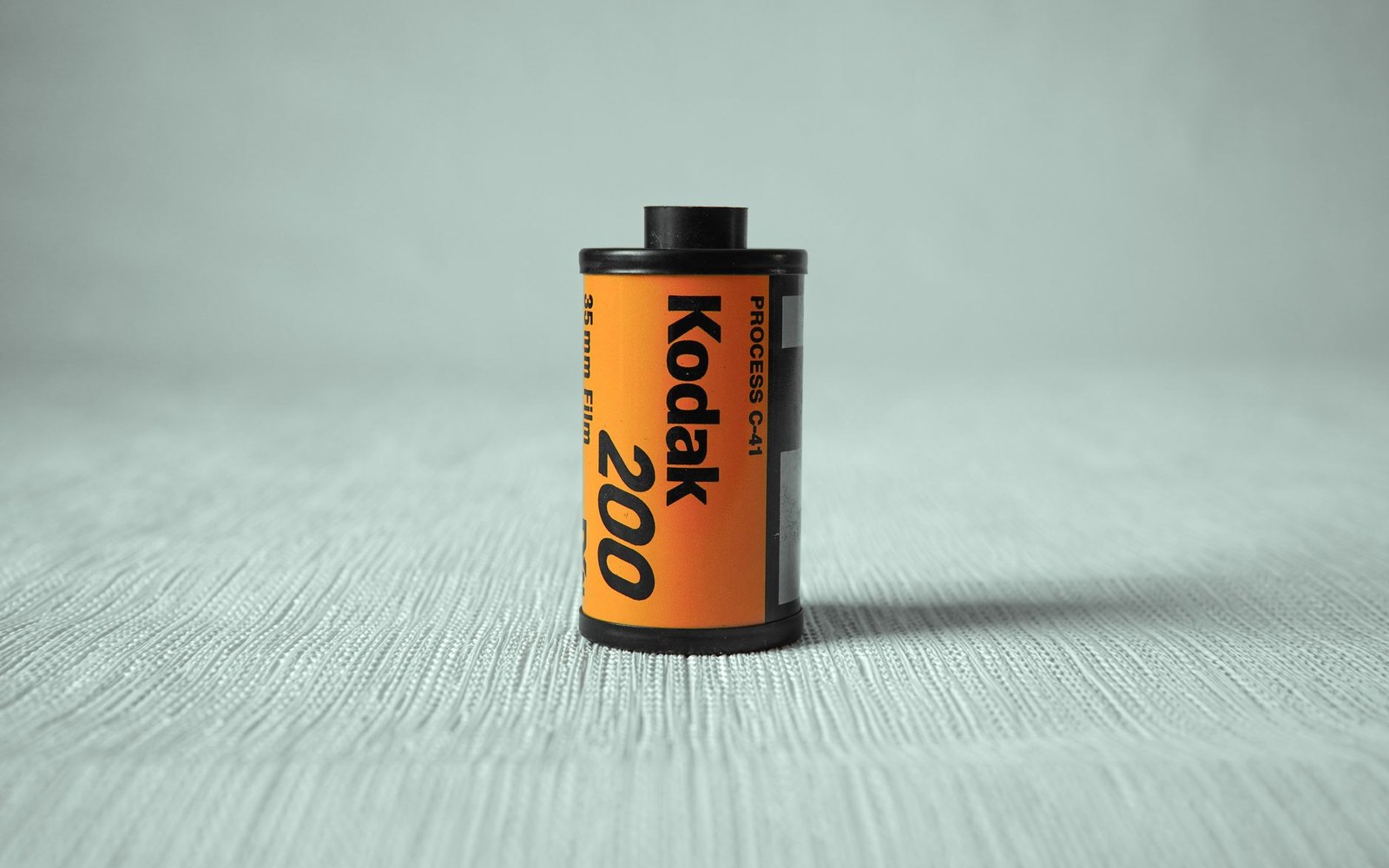
Black-and-white chemistry is tolerant. C-41, the colour negative process introduced by Kodak in 1972, is not: it specifies 38 °C ± 0.15 °C for the developer stage, a precision that historically kept colour processing inside commercial labs. Cinestill's Cs41 kit and Tetenal's now-discontinued three-bath systems shifted that calculus by reformulating the process for room-temperature compensation, and the steady contraction of commercial photofinishing infrastructure in the years since digital took over gave home chemists a practical incentive to close the gap themselves: as labs closed or raised prices, the kitchen sink became the alternative.
The result is a supply chain that looks less like a revival than a structural rebalancing. Film coating runs in Rochester and Mobara feed rolls that are increasingly processed not in wholesale labs but in domestic bathrooms, with a thermometer, a changing bag and forty minutes of intermittent agitation. The infrastructure adapted because the demand required it to.
Where this comes from
- Ilford Photo's published guidance on home processing · www.ilfordphoto.com
- CIPA shipment data · www.cipa.jp