The film resurgence ran into a hardware wall
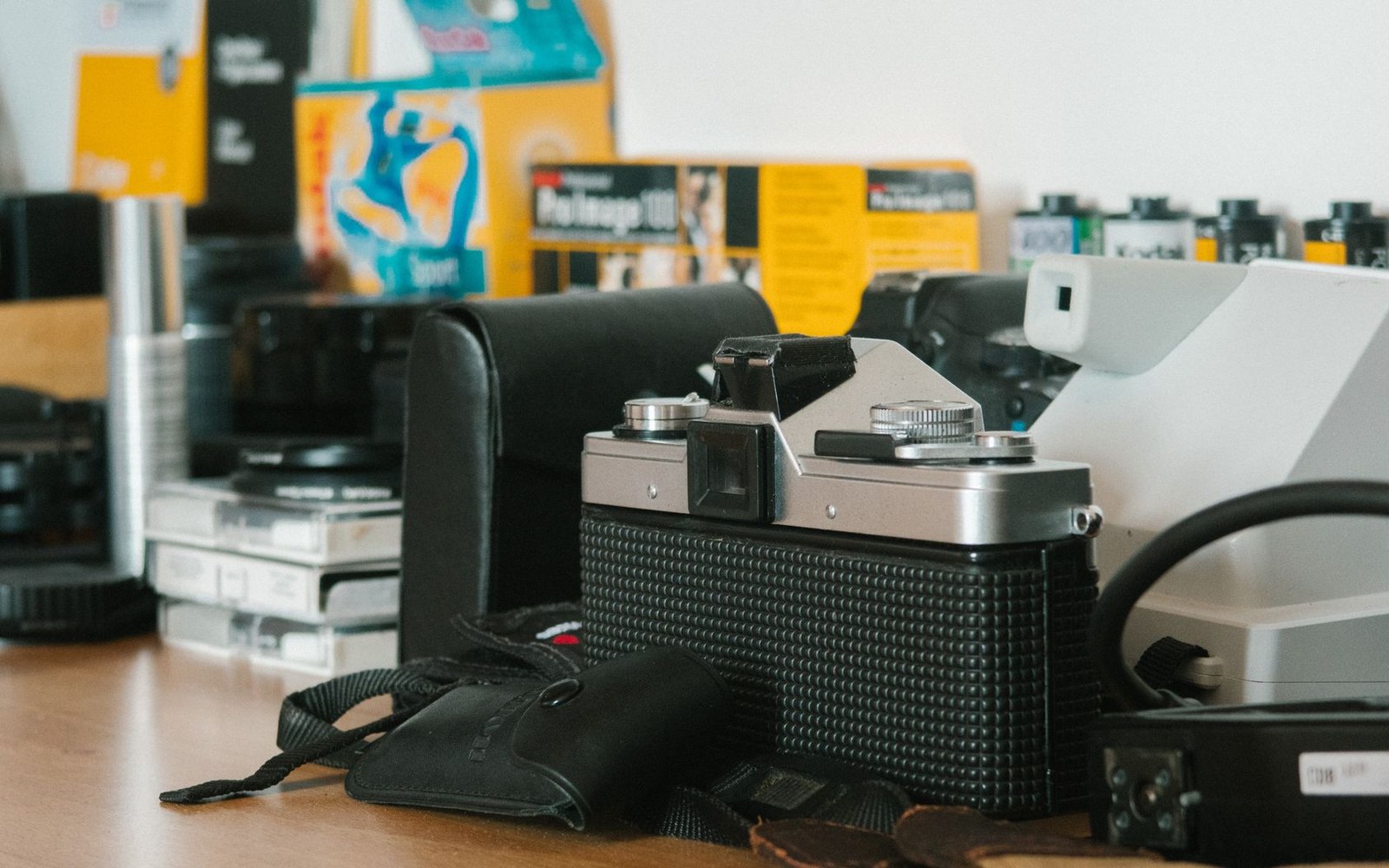
Film sales have grown measurably since the mid-2010s, with Kodak Alaris, Ilford, and Harman Technology all reporting increased demand across their emulsion ranges. The cameras exist — the Pentax 17 joined a market already served by Lomography, Fujifilm, and a secondhand body supply that shows no sign of exhausting itself. The chemistry exists. What does not exist, in any meaningful quantity, is a new dedicated film scanner that matches the resolution and dynamic range the format deserves.
The bottleneck is not metaphorical. It is a specific product category that two of its most capable makers abandoned, leaving a gap the surviving manufacturers have not filled.
05.6 §1What the market actually contains
The current dedicated film scanner market resolves, in 2025, to a short list. Plustek manufactures the OpticFilm 8300i and OpticFilm 135, both 35 mm strip scanners with optical resolutions in the range of 7200 dpi and hardware infrared dust correction via Digital ICE-compatible implementations. Reflecta, a German brand, produces flatbed-style strip and slide scanners at a similar tier. Epson's flatbed range — the Perfection V600 and V850 — handles film through transparency adapters and remains in production, but flatbed optics impose a ceiling on effective resolution that dedicated film scanners exist precisely to exceed. No major Japanese imaging manufacturer currently ships a dedicated 35 mm film scanner for the consumer or prosumer market.
That absence has a date. Nikon discontinued its CoolScan line in the late 2000s, ending production of the LS-5000 ED and the flagship LS-9000 ED medium-format unit. Minolta's Dimage Scan range, which included the respected Elite 5400, was discontinued when Konica Minolta exited the photographic hardware business in 2006. Both lines had reached optical resolutions and dynamic-range figures — the LS-9000 ED offered a 4.8 Dmax — that no currently manufactured dedicated scanner has matched for 35 mm work.
It is a specific product category that two of its most capable makers abandoned, leaving a gap the surviving manufacturers have not filled.
05.6 §2What discontinued hardware now costs
The secondhand market priced that gap immediately and has not relented. The Nikon CoolScan V ED (LS-50), a mid-range unit when new, trades on used markets for several hundred to over a thousand US dollars depending on condition — figures that at the upper end exceed its original retail price. The LS-9000 ED regularly lists above two thousand dollars. The Minolta Dimage Elite 5400, lauded for its 5400 dpi optical resolution, commands prices in the four-to-seven-hundred-dollar range for working units.
Map Camera in Tokyo, which publishes used-equipment rankings and pricing, documents the persistent secondhand demand for discontinued film scanners alongside the body market. The pattern is the same as the one visible in discontinued DSLR rankings: the hardware nobody makes any more is the hardware on the shelf, at a premium.
Pacific Image Electronics, a Taiwanese manufacturer, occupies the upper tier of current production with the PrimeFilm XA and related models, targeting optical resolutions above 10,000 dpi. These units have genuine professional users but limited retail distribution outside specialist channels, and the brand carries nothing like the name recognition that drove volume purchasing of the Nikon and Minolta lines.
05.6 §3Why no manufacturer has moved
The commercial logic is legible even if the outcome is frustrating. Dedicated film scanner production requires precision optical engineering, tight mechanical tolerances for film transport, and manufacturing volumes that the market may not sustain at a price point consumers will accept. CIPA does not publish a separate shipment series for scanners, which itself reflects the category's marginal standing in the industry's own accounting. The mirrorless pivot by Canon, Nikon, and Sony has consumed engineering resources and capital; a scanner line competes for neither sensor supply nor mount ecosystem and earns no loyalty from lens buyers.
The partial substitute that has proliferated is camera scanning — using a digital body, a macro lens, and a light source to photograph negatives rather than scan them. The technique is real, the results competitive at high pixel counts, and the cost of entry low for anyone already holding a capable body. But it is a workaround, not a product. The film resurgence created demand for a piece of hardware that the industry walked away from in 2006, and nothing since has replaced it.
Where this comes from
- Epson's flatbed range · www.epson.com
- trades on used markets · www.ebay.com
- documents the persistent secondhand demand for discontinued film scanners · www.mapcamera.com