01.3 §1Repurposing What Was Already There
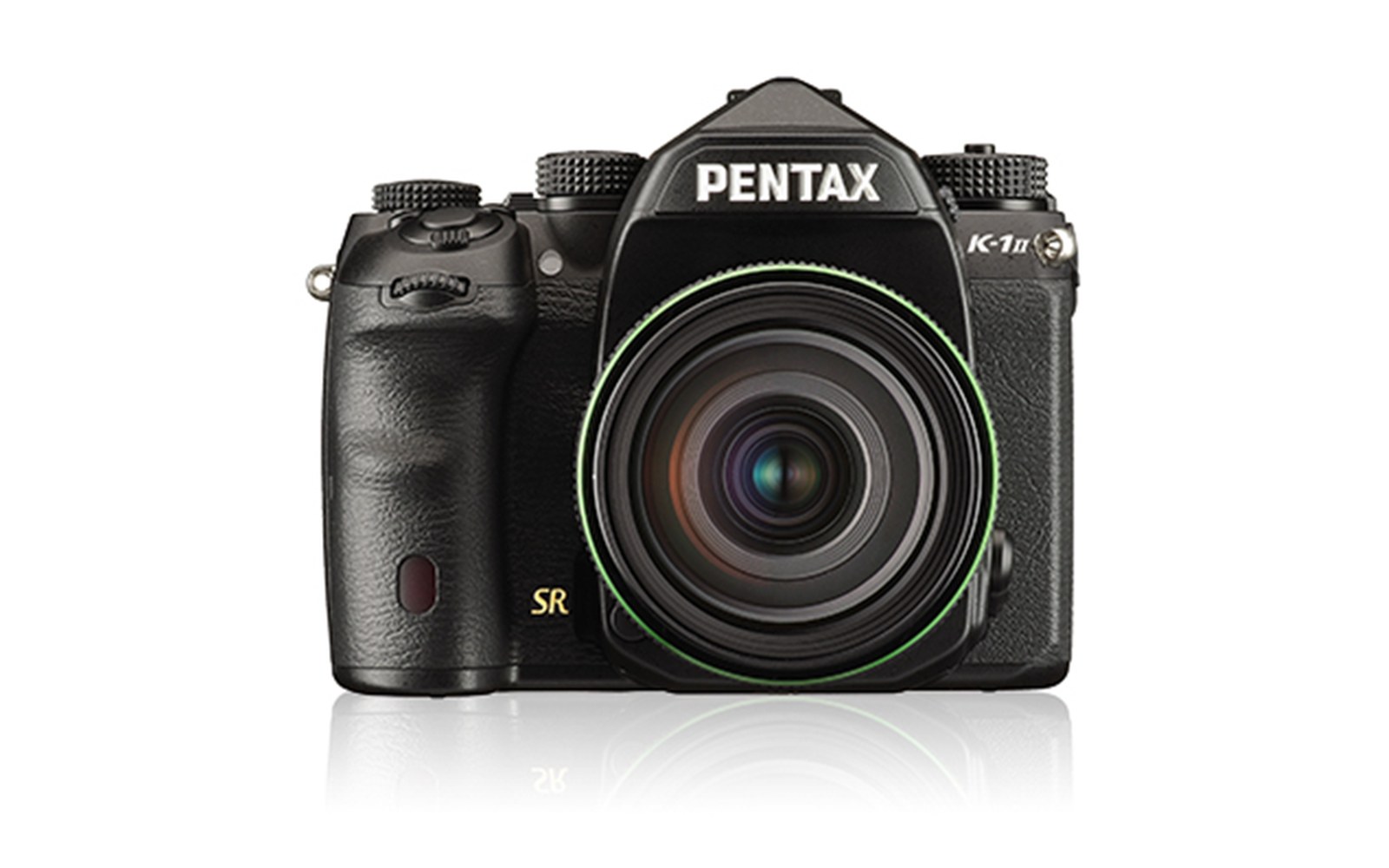
The Pentax K-1 II arrived in 2018 as a 36.4-megapixel full-frame DSLR with a sensor-shift stabilisation system Ricoh calls Shake Reduction. That system moves the sensor along five axes to compensate for hand tremor during ordinary shooting. What Ricoh also built into it — without adding a second motor, a separate drive unit or any external hardware — is Astrotracer: a mode that redirects the same actuators away from hand-shake correction and toward a calculated compensation for Earth's rotation.
The logic is straightforward. A camera pointed at the night sky and left on a tripod will record stars as arcs rather than points once exposure time exceeds roughly twenty to thirty seconds, because the planet turns beneath them. Dedicated astronomical equatorial mounts solve this by rotating the entire camera on a driven axis. Astrotracer solves it by moving the sensor itself, in the opposite direction, at a rate computed from GPS latitude data.
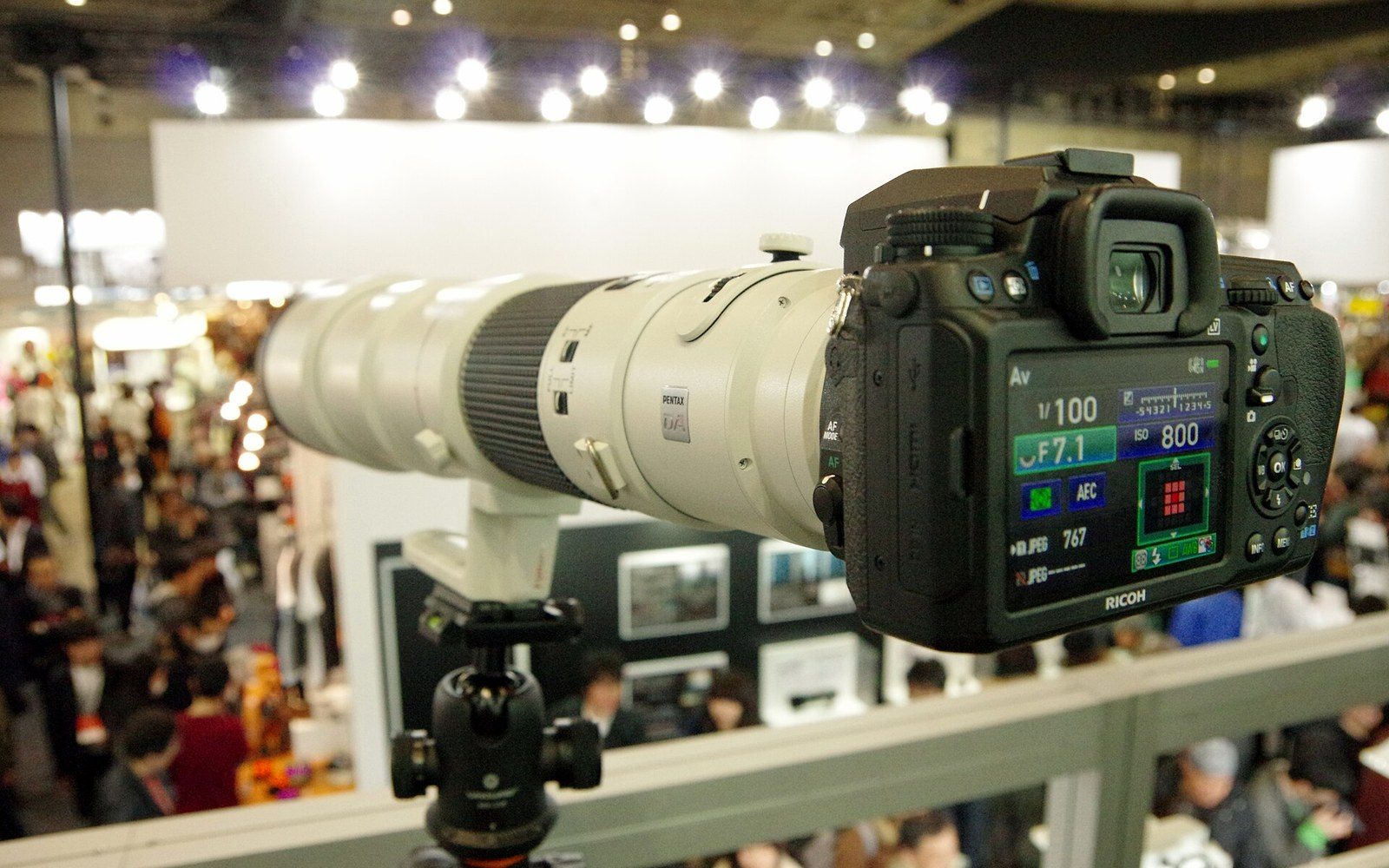
The K-1 II reads its precise geographic position via the built-in GPS receiver. Latitude determines the apparent rotation rate of the sky at any given location — faster at the equator, absent at the poles. The camera calculates the vector and speed at which stars appear to drift across the focal plane, then commands the Shake Reduction actuators to follow that drift, holding starlight stationary on the sensor for the duration of the exposure. The sensor, in effect, becomes the tracking mount.
01.3 §2What the Specification States
Ricoh's published specification for the K-1 II lists the GPS module as supporting GPS, GLONASS and MICHIBIKI positioning signals. Astrotracer is listed as a dedicated shooting mode, not a firmware add-on, and operates within the physical limits of the SR actuator range. Those limits constrain usable exposure time before the sensor reaches the boundary of its travel and can no longer track. Ricoh publishes a figure of up to approximately three minutes as the effective compensation window — beyond that, trailing resumes. The practical ceiling in the field is also focal-length dependent: at wider angles the sensor's travel covers more of the frame before stars drift beyond it; at longer focal lengths the angular rate becomes harder to accommodate fully.
Dedicated astronomical equatorial mounts solve this by rotating the entire camera on a driven axis.
One consequence of the mechanism is that the tracked stars occupy a stationary position on the sensor while the terrestrial foreground — a horizon, a tree line, a building — drifts instead, as the sensor moves beneath it. Landscape elements therefore show slight blur in single Astrotracer exposures. Photographers who want sharp foregrounds alongside sharp stars combine a tracked exposure for the sky with a separate untracked exposure for the ground; the camera's GPS data and the known orientation make alignment in post-production precise. This is a documented limitation of the approach, acknowledged explicitly in Ricoh's own support materials.
The K-1 II's full-frame sensor — 36 × 23.9 mm, based on a Sony-derived design — is relevant here because larger pixels at equivalent resolution gather more light per unit time, which matters when the objective is reducing noise across a three-minute exposure in a dark field. The K-1 II offers a native ISO ceiling of 204800 in its published specification, though Astrotracer operation sits in the context of longer exposures where lower ISO values and the tracking compensation together carry the light-gathering load.
No additional hardware is required. The GPS receiver and SR mechanism ship in the same sealed body as standard equipment. Earth's rotation proceeds at a fixed sidereal rate of approximately 15 arcseconds per second of time — a precise, known quantity that makes the calculation deterministic rather than adaptive. The sensor does not need to measure the drift; it simply needs to know where it is.
That is the engineering point. Astrotracer is not an add-on feature that required new hardware investment. It is a software and firmware layer placed over an actuator system built for a different primary purpose, converting a stabilisation mechanism into a tracking mount when the photographer changes mode.