01.1 §1What Ricoh Built
The Pentax K-3 Mark III shipped in April 2021 in Japan, entering a market that had already delivered its verdict on the reflex mirror. Canon had launched the EOS R system in 2018. Nikon followed with Z-mount the same year. Sony had been selling full-frame mirrorless bodies since 2013. By the time the K-3 III reached shelves, the question was not whether mirrorless would dominate — CIPA's interchangeable-lens camera shipment data had long since shown volume collapsing from the roughly 12-million-unit peak of 2012 to a fraction of that — but whether a surviving DSLR maker could still justify the engineering investment a new body required.
Ricoh's answer was specification-first. The K-3 III carries a 25.7-megapixel APS-C sensor with a back-side illuminated architecture — a BSI sensor, meaning the photodiode layer faces away from the wiring, increasing light-gathering efficiency per pixel — supplied, as is the industry norm for APS-C bodies of this class, through Sony Semiconductor. The imaging processor is Ricoh's own PRIME V generation, which the company credits for the body's burst ceiling of about 12 frames per second. Those figures are published in Ricoh's own K-3 III specification sheet.
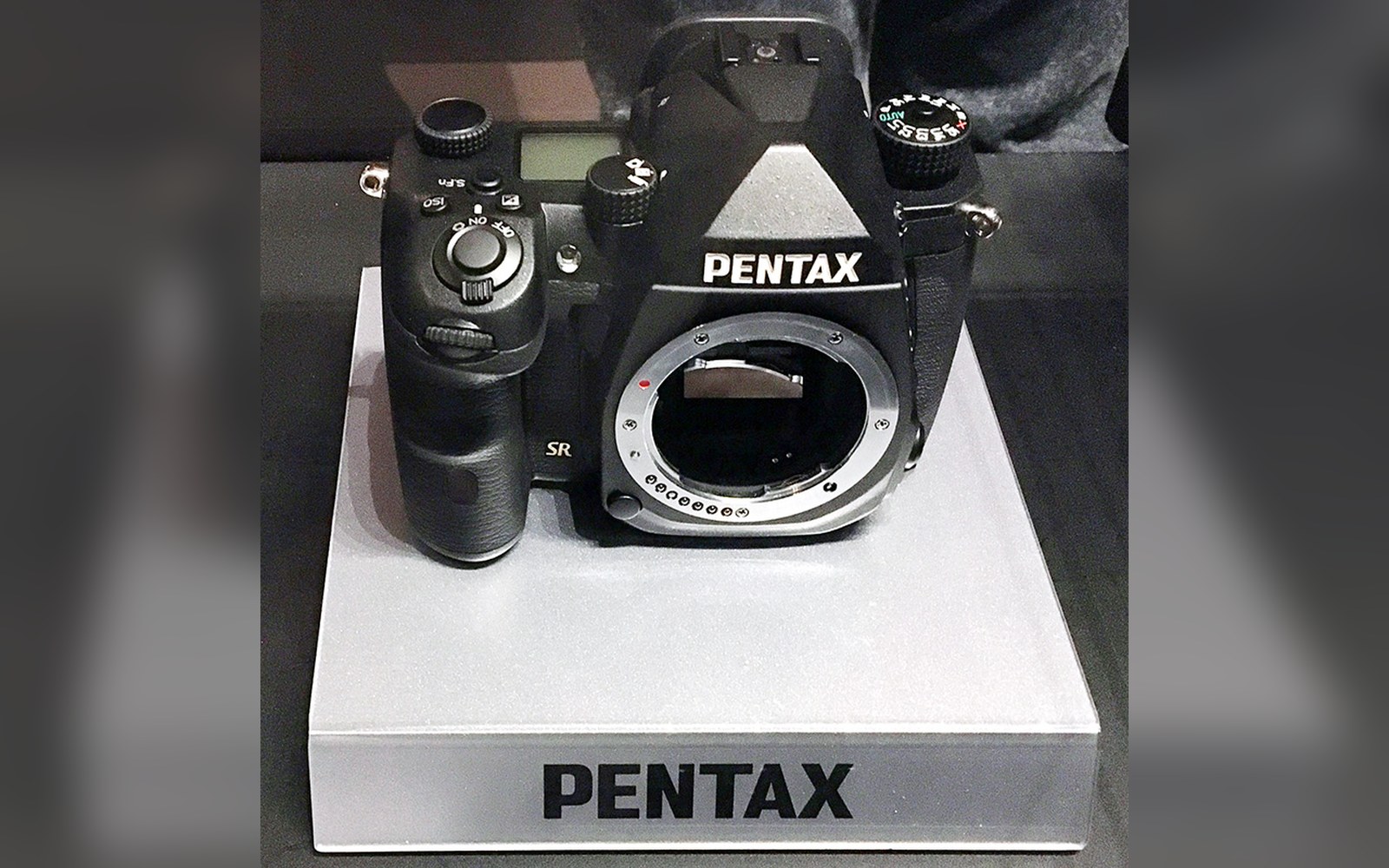
The optical viewfinder carries a 1.05× magnification and 100-percent frame coverage — numbers that exceed the K-3 II it replaced, and numbers that matter specifically because the viewfinder is the argument. If the mirror goes, the optical path goes with it; Ricoh's product rationale rested on the assertion that a pentaprism finder at this specification is qualitatively different from an electronic viewfinder, not merely different in degree. Whether that argument holds commercially is a separate question from whether the engineering is real. The pentaprism is real.
01.1 §2What the Sensor and Shutter Combination Enables
At 25.7 megapixels across an APS-C frame — roughly 23.5 × 15.6 mm — the pixel pitch is tight enough to extract detail without the per-pixel light collection penalty that very high pixel counts impose at this sensor size. The BSI arrangement recovers some of that penalty. The result is a sensor that Ricoh positioned for high-ISO environmental work rather than studio resolution: the sensitivity range runs from ISO 100 to ISO 1,600,000, per the published specification.
The body also carries Pixel Shift Resolution, Pentax's multi-exposure mode that moves the sensor in single-pixel increments across four sequential captures and composites the result, placing full-colour data at every pixel location rather than interpolating from a Bayer array. The Bayer array — the alternating red, green and blue filter mosaic that covers virtually every colour digital sensor — records only one colour channel per pixel and reconstructs the missing two by sampling neighbours. Pixel Shift Resolution eliminates that reconstruction for static subjects, recovering resolving capacity that demosaicing otherwise costs. It requires a stationary scene, which limits its field application, but the feature is genuine and the engineering distinction from standard Bayer capture is real.
Dual UHS-II SD card slots appear in the specification. That is a professional-tier provision: simultaneous write for redundancy, or sequential overflow, or JPEG-plus-RAW separation across cards. The body accepts the K-mount — Pentax's bayonet standard introduced in 1975 at a 45.46 mm flange-to-sensor distance, unchanged since — which means every K-mount lens made in the intervening five decades is mechanically compatible at the correct flange distance. That is a legacy-compatibility argument no mirrorless system built after 2013 can match for its own native lenses, because those systems do not yet have five decades of native glass.

In-body image stabilisation — IBIS, implemented here as Pentax Shake Reduction — operates at five axes and is rated to five stops of compensation, per Ricoh's published figures. Because the stabilisation is sensor-based rather than lens-based, it operates with any K-mount lens regardless of age, including glass that predates electronic coupling entirely.
01.1 §3The Market Argument Ricoh Made
The K-3 III arrived into a contracting market with a specific claim: that a coherent user base existed which had accumulated K-mount systems over years or decades, which used optical viewfinders by preference, and which would not be served by adapting to a mirrorless platform they had not chosen. That argument does not require the DSLR to outsell mirrorless; it requires the segment to be large enough to cover the cost of developing and manufacturing a new body at a price that sustains the line.
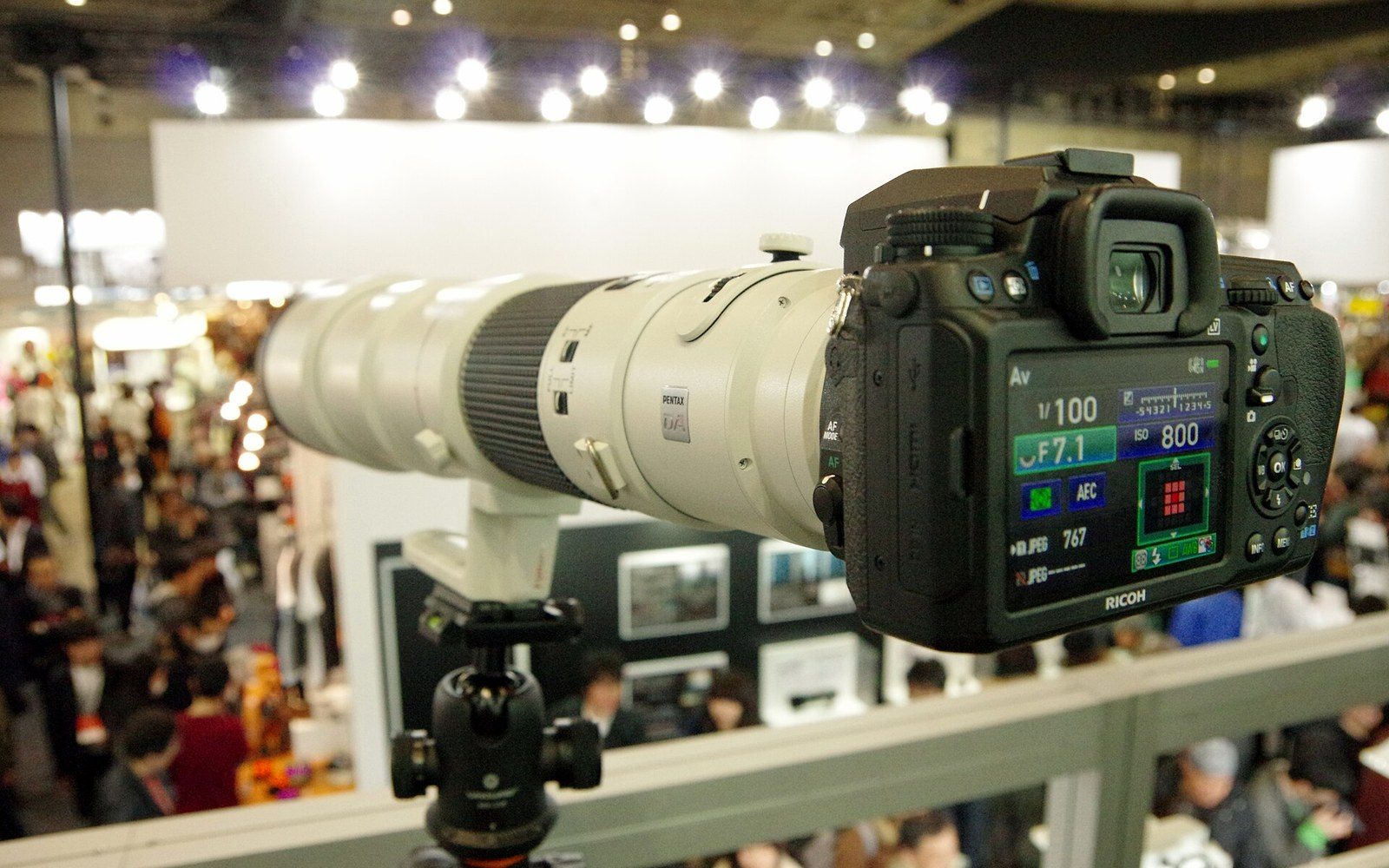
Ricoh's approach to that economic problem was the body's positioning as an outright flagship — the top of the APS-C DSLR line, priced accordingly — rather than a volume product. Premium positioning in a declining-volume category is a known survival strategy. CIPA data tracking average selling prices alongside shipment volumes shows precisely this dynamic playing out across the interchangeable-lens category from the mid-2010s: unit volume fell, average prices rose, and the manufacturers left standing were those who moved upmarket rather than chasing collapsing mid-range volume.
The K-3 III is not the only product in Ricoh's current strategy. The K-3 III Monochrome — a variant with the colour filter array removed from the same sensor, shipped in 2023 — extends the body's engineering into a different niche. The Pentax 17 half-frame film camera arrived in 2024, addressing an entirely separate market. Neither product is a mainstream volume play. Together, they describe a company that has accepted a small market and is designing specifically for it rather than competing for scale it cannot reach.
What the K-3 III documents, then, is the arithmetic of justified specialisation. A 25.7-megapixel BSI sensor, 14 fps burst, 1.05× pentaprism finder, five-axis IBIS, dual UHS-II slots and full K-mount compatibility can be packaged into a body that a particular kind of photographer will not replace with a mirrorless system — not because the mirrorless systems are inadequate, but because the K-3 III is not inadequate either, and the glass that mounts on it took years to accumulate. Ricoh is betting, with some evidence, that this is enough.