02.6 §1The Alliance and What It Actually Agreed On
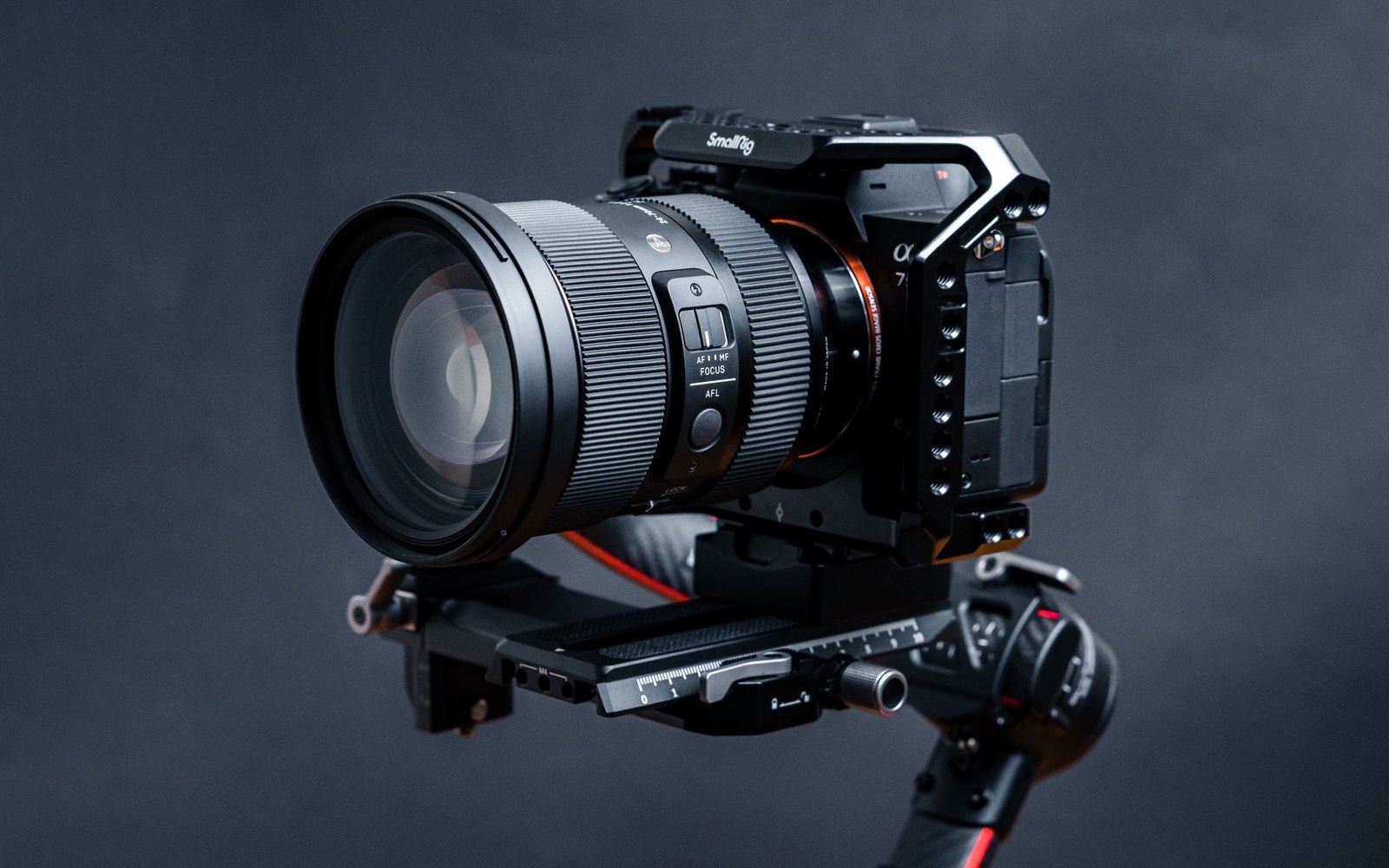
At Photokina 2018, Panasonic, Leica and Sigma announced the L-Mount Alliance — a formal agreement to share a single bayonet specification across all three manufacturers' interchangeable-lens bodies. The mount itself originated with Leica, developed for the SL system introduced in 2015. Its defining physical numbers are a 20 mm flange-to-sensor distance and a 51.6 mm inner diameter, the latter wide enough to cover full-frame sensors with comfortable optical clearance. Any lens built to the L-mount specification mounts on any body from any of the three signatories. That is the full extent of the engineering commonality.
The sensor choices each company made from that shared starting point diverge completely. Panasonic brought Micro Four Thirds heritage and a long-standing relationship with its own sensor pipeline. Leica brought an existing full-frame SL body and the engineering priorities of a company that sells cameras at a price point where margin supports bespoke silicon. Sigma brought its SA-mount DSLR experience and a stated ambition to enter full-frame mirrorless without developing a proprietary mount from scratch. Three companies, one flange specification, three distinct approaches to everything behind it.
02.6 §2What Each Company Shipped
Panasonic's first L-mount bodies were the S1 and S1R, both announced at the same 2018 Photokina event and shipped in 2019. The S1 carries a 24.2 MP full-frame sensor; the S1R a 47.3 MP full-frame sensor. Panasonic subsequently added the S1H — a body oriented toward video, with a full-frame sensor and a form factor designed for rigged cinema use — and the S5 and S5 II lines, the latter introducing phase-detect autofocus on sensor, a capability the original S1 series conspicuously lacked. The S5 II uses a 24.2 MP full-frame BSI sensor with on-sensor phase-detect autofocus, a significant revision to Panasonic's historical reliance on contrast-detection. None of these sensors are shared with Leica or Sigma.
Leica's L-mount output covers a wider price and format range than either partner. The SL2, released in 2019, uses a 47.3 MP full-frame sensor — the same megapixel count as the Panasonic S1R, though Leica has not confirmed identical silicon. The SL2-S, released in 2020, uses a 24.6 MP full-frame sensor optimised for low-light and video. Below full-frame, Leica released the CL and TL2 as APS-C L-mount bodies, demonstrating that the mount's 51.6 mm inner diameter accommodates formats smaller than the one it was sized to serve. Leica has not disclosed its sensor sourcing, a consistent policy across its product line.
Sigma's L-mount entry is the fp, released in 2019, and the fp L, released in 2021. The fp is among the smallest full-frame interchangeable-lens cameras by physical volume. It uses a 24.6 MP full-frame BSI CMOS sensor. The fp L uses a 61 MP full-frame BSI sensor — the same sensor specification as Sony's A7R IV, though Sigma has not formally confirmed the supplier. Given Sony Semiconductor's role as sensor supplier to a substantial portion of the industry, the inference is reasonable without being official. Neither fp body includes in-body image stabilisation, a notable omission at any price point.
02.6 §3A Shared Mount Is Not a Shared Platform
The L-Mount Alliance is best understood as a lens-market agreement. A Sigma 35mm Art lens mounts on a Leica SL2. A Panasonic S Pro 70-200mm mounts on a Sigma fp. The optical geometry works because the flange distance and mount diameter are fixed by the alliance specification. The sensor readout speed, the autofocus implementation, the stabilisation hardware, the video codec — none of these are coordinated. Each company built the body its own engineering history and customer base demanded.
That divergence is not a failure of the agreement; it is precisely what the agreement was designed to allow. Leica needed lens-market depth it could not supply alone. Panasonic needed a full-frame mount without the installed base risks of a proprietary specification. Sigma needed a route to mirrorless without developing mount licensing from scratch. All three needs were served by standardising the one thing that had to be identical — the mechanical interface — and leaving everything else unspecified.